How to Find Reliable Non Woven Fabric Suppliers?
Finding a reliable supplier is more than comparing prices on a quotation sheet. The non woven fabric industry serves medical, hygiene, filtration, construction, agriculture, and packaging markets. Each application demands different performance evidence. According to Smithers’ “The Future of Nonwovens to 2028,” global demand continues to expand, supported by hygiene products, healthcare use, and technical applications. Grand View Research also identifies rising demand for lightweight and high-performance nonwovens. These trends create opportunity, but they also attract inconsistent suppliers.
Look beyond polished websites. Request recent test reports, production photographs, material specifications, and traceable sample labels. Check whether the supplier controls fiber selection, web formation, bonding, finishing, and final inspection. A trustworthy factory should explain basis weight, tensile strength, elongation, air permeability, moisture resistance, and tolerance limits clearly. It should also identify the testing method and laboratory behind each result. Vague claims are warning signs.
Supplier audits add useful evidence. Review equipment maintenance, batch records, warehouse conditions, and corrective-action procedures. Confirm certifications relevant to the intended market, such as ISO 9001 or OEKO-TEX, through valid certification records. INDA’s technical resources emphasize consistent testing and clear terminology across nonwoven applications. Still, no document replaces a controlled trial order. Ask for samples from different production batches. Compare their texture, roll edges, odor, thickness, and test results.
A careful process reduces risk. It does not eliminate it. Even experienced buyers can overlook communication delays or unreported material changes. Define acceptance standards in writing, inspect the first shipment, and review performance after delivery. Reliable sourcing grows from evidence, repeated verification, and honest conversations.
Define Your Non Woven Fabric Requirements
Before contacting non woven fabric suppliers, describe the fabric’s job. Will it filter liquid, absorb spills, protect a product, or support a disposable item? The end use affects fiber choice, bonding method, and performance targets. Small details matter.
Record the required basis weight in grams per square meter, fabric width, roll length, color, and fiber composition. Specify properties such as tensile strength, elongation, air permeability, or absorbency when they matter. Give test methods and acceptable ranges, not just phrases like “strong” or “soft.” If the material needs a coating or other treatment, describe its purpose and any limits on odor, texture, or appearance.
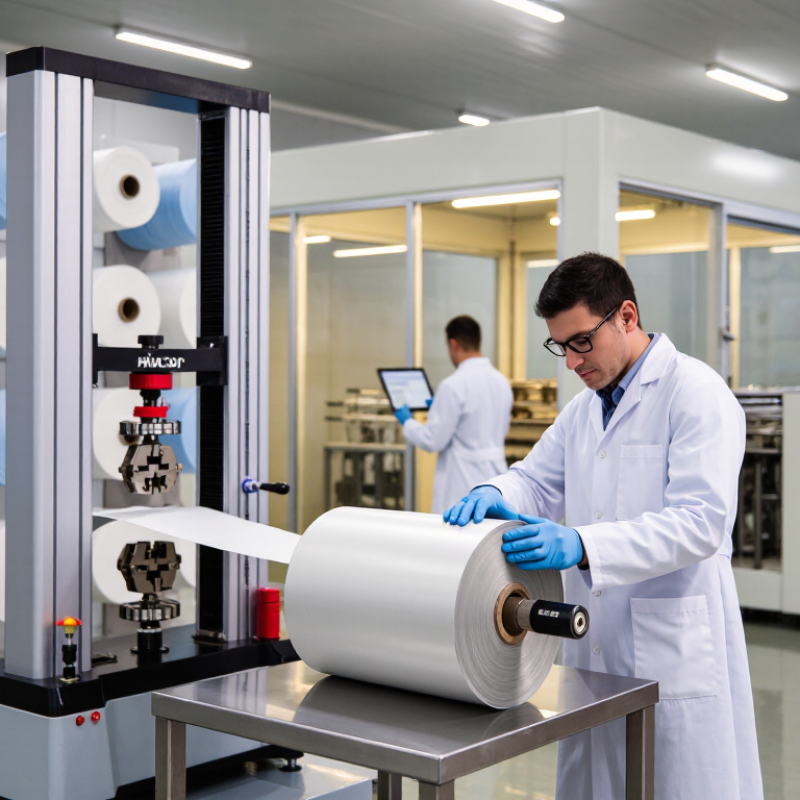
A first specification is rarely complete; testing samples can reveal assumptions you did not know you had. Check the fabric under realistic conditions: cut it, stretch it, wet it, or run it through your equipment. Note what changes. A sample may feel right by hand but behave differently at production speed. Decide which requirements are essential and where some variation is acceptable. If figures are uncertain, mark them as provisional and ask suppliers to identify what they can measure consistently. That makes quotations easier to compare and leaves less room for mismatched expectations.
Research and Shortlist Potential Suppliers
Start by defining the fabric you need: fiber type, weight, width, color, finish, and intended use. A clear specification helps suppliers answer consistently. Ask for product data sheets and recent sample swatches, then compare details such as thickness, texture, and edge quality. Small differences matter. If possible, test samples under the conditions your product will face, rather than judging them by touch alone.
Tips: Keep a simple comparison sheet. Record response time, sample consistency, stated production capacity, and unanswered questions. Save emails and documents together.
Build a shortlist from suppliers that provide specific answers and supporting documents, not just broad claims. Check how long they have operated, what materials they handle, and whether their stated capabilities match your order size. Request references or examples of similar work when appropriate. A polished sample is useful, but it cannot prove every production batch will match. That uncertainty deserves a question. Speak with each candidate about quality checks, lead times, minimum quantities, and how they handle defects. Compare the answers in writing. One supplier may be better for a small trial, while another suits repeat orders. Keep the shortlist manageable; too many options can make careful comparison harder.
Verify Supplier Quality, Capacity, and Certifications
Reliable sourcing starts with evidence, not attractive samples. Request production samples from recent lots. Compare weight, thickness, color, tensile strength, and air permeability. Record results under consistent test conditions. Ask for the test method and laboratory details. A soft hand feel proves very little. It can hide weak bonding.
Capacity needs equal scrutiny. Review machine lists, monthly output, shift patterns, and current order load. Ask how the supplier manages peak demand and equipment failure. Check whether raw material storage protects fibers from moisture and contamination. Visit the site when practical, or arrange a live video walkthrough. Watch the production line, warehouse labels, inspection records, and rejected-roll area. Numbers can be polished. Production evidence is harder to fake.
Treat certifications as documents requiring verification. Check the certificate holder, scope, issue date, expiry date, and covered factory address. Confirm details through public records or direct contact with the issuing organization. The certificate must match the actual product and production site. Request recent audit findings and corrective-action records. A supplier may pass one audit yet struggle with consistency. I once accepted a clean sample without checking lot variation; that gap cost time later. Build a trial order with clear acceptance limits and inspect multiple rolls. Leave room to question your own checklist. It may be incomplete.
Compare Samples, Prices, and Service Terms
Reliable non woven fabric sourcing begins with disciplined comparisons. Grand View Research valued the global nonwoven fabrics market at about USD 53.7 billion in 2022. It also projected a 7.4% annual growth rate through 2030. This growth attracts new suppliers, but capacity alone does not prove reliability.
Request identical samples from several suppliers. Compare basis weight, thickness, tensile strength, air permeability, and lint release. Use the same test conditions for every sample. A laboratory report is useful, but a production-line trial reveals more. Check roll edges, winding tension, odor, and consistency across the roll. Small differences matter. For medical, filtration, or hygiene applications, confirm relevant performance tests and traceability documents. Industry guidance from EDANA emphasizes standardized testing and transparent technical data across nonwoven applications.
Price comparisons need more than a kilogram figure. Include shipping, minimum order quantity, tooling, packaging, testing, and payment terms. A cheaper roll may contain higher variation or require more inspection. That cost appears later. Service terms deserve equal attention. Ask about lead time, replacement procedures, sample charges, technical support, and communication during delays. Written tolerances are safer than friendly promises. The Smithers report, The Future of Nonwovens to 2028, highlights continued demand for specialized nonwovens, where consistency and technical capability often influence purchasing decisions. I would still question every forecast. Market reports use different definitions, regions, and base years. Compare the supplier’s sample, quotation, and contract line by line. Keep the evidence.
Evaluate Contracts, Production, and Ongoing Reliability
Finding a reliable non woven fabric supplier begins with a contract that leaves little room for guesswork. Specify fiber type, basis weight, width, color tolerance, roll length, packaging, and inspection standards. Include approved sample references and clear procedures for handling rejected goods. Payment terms should match production milestones, not promises alone. I once accepted a vague delivery clause, and a two-week delay disrupted an entire packing schedule.
Ask how production is controlled on the factory floor. A capable supplier should explain raw material checks, machine settings, in-process inspections, and final testing. Request recent test reports for tensile strength, tear resistance, thickness, and moisture behavior. Visit the facility when possible. Look at roll labels, storage conditions, and cleaning routines. A neat showroom is not enough. Production evidence matters more.
Ongoing reliability appears after the first shipment. Track delivery accuracy, response time, defect rates, and corrective actions over several orders. Suppliers should provide batch traceability and notify you before changing materials or equipment. Small details reveal discipline: consistent roll cores, readable labels, sealed packaging, and prompt answers when specifications change. Keep records, even when cooperation feels easy. Trust is useful, but documented performance is safer.
No supplier performs perfectly every time. A strong partner admits problems early and proposes measurable fixes. Ask for revised timelines, inspection results, and follow-up dates. If every explanation remains vague, reconsider the relationship before volume increases.
How to Find Reliable Non-Woven Fabric Suppliers?
Use this practical 100-point evaluation framework to compare suppliers across contract quality, production capability, compliance, and long-term reliability. The percentages represent recommended procurement weights rather than company or brand performance data.
Evaluation guidance: Confirm written specifications, Incoterms® 2020, payment terms, inspection rights, production capacity, quality-control procedures, testing documentation, delivery records, traceability, and corrective-action processes before signing a contract.