How to Choose Non Woven Fabric Suppliers in 2026?
Choosing reliable non woven fabric suppliers in 2026 requires more than comparing price lists. The right partner should understand your product, production conditions, market requirements, and expected service life. A medical gown, filtration layer, shopping bag, and automotive liner need very different fabric structures. Weight alone cannot prove quality.
Dr. Behnam Pourdeyhimi, a leading nonwoven materials researcher, has said, “Nonwovens are engineered materials designed for specific performance.” That principle should guide every supplier evaluation. Ask how the supplier controls fiber selection, web formation, bonding, moisture, and roll consistency. Request recent test reports for tensile strength, elongation, air permeability, thickness, and basis weight. Confirm whether testing follows recognized ISO or ASTM methods.
Visit the factory when possible. Look at storage areas, laboratory equipment, production records, and packaging details. A clean warehouse matters. So does traceability. Check raw material sources, batch coding, complaint handling, and corrective-action procedures. Certifications can support trust, but certificates alone are not enough. Verify their scope and validity.
Request samples from several production batches, not one carefully selected roll. Compare them under real conditions. Test cutting, sewing, lamination, printing, or thermal bonding. Small differences may become expensive failures.
Cost still matters. However, the cheapest quotation may hide unstable delivery, excessive minimum orders, or weak technical support. No supplier is perfect. Our assumptions can be wrong. A clear trial order, written specifications, and measurable acceptance criteria reduce that risk. In 2026, the strongest non woven fabric supplier will combine dependable manufacturing with honest communication, documented expertise, and the flexibility to improve when your requirements change.
Define Your Non Woven Fabric Requirements for 2026
Define your non woven fabric requirements before comparing suppliers in 2026. Grand View Research estimated the global nonwoven fabrics market at about USD 53 billion in 2023, with strong growth through 2030. That growth hides a practical problem: suppliers may quote similar fabrics with different performance. Specify the end use, fiber type, production process, basis weight, thickness, tensile strength, air permeability, and roll width. A filtration layer needs controlled pore structure. A medical or hygiene layer needs documented cleanliness and skin-contact testing. Construction materials may require stronger tear resistance and moisture control.
Make the specification measurable.
Ask for test methods, recent laboratory reports, batch consistency data, minimum order quantities, lead times, and storage conditions. Smithers’ global nonwovens outlook identifies hygiene, filtration, and construction as key demand areas, each with different technical priorities. Request three sample lots, not one attractive sample. Compare them after washing, folding, heat exposure, or simulated production.
Do not overlook traceability. Require fiber-origin records, production dates, and corrective-action procedures. Certificates alone are not enough. I have seen technically promising samples fail when roll tension changed during converting. That risk deserves a pilot order. Your first specification may also be imperfect. Review it after testing, then revise the basis weight, strength target, or tolerance before signing a long-term agreement.
Evaluate Supplier Materials, Production Capabilities, and Quality
How to Choose Non Woven Fabric Suppliers in 2026?
When evaluating non woven fabric suppliers, start with the material, not the sales presentation. Ask whether the fabric uses polypropylene, polyester, viscose, or a certified recycled input. Request the technical data sheet and a production sample from the same batch. Check GSM, thickness, tensile strength, elongation, air permeability, and moisture behavior. A soft hand feel is useful, but it cannot replace test results. Small differences in fiber blend can affect cutting, bonding, printing, and final performance.
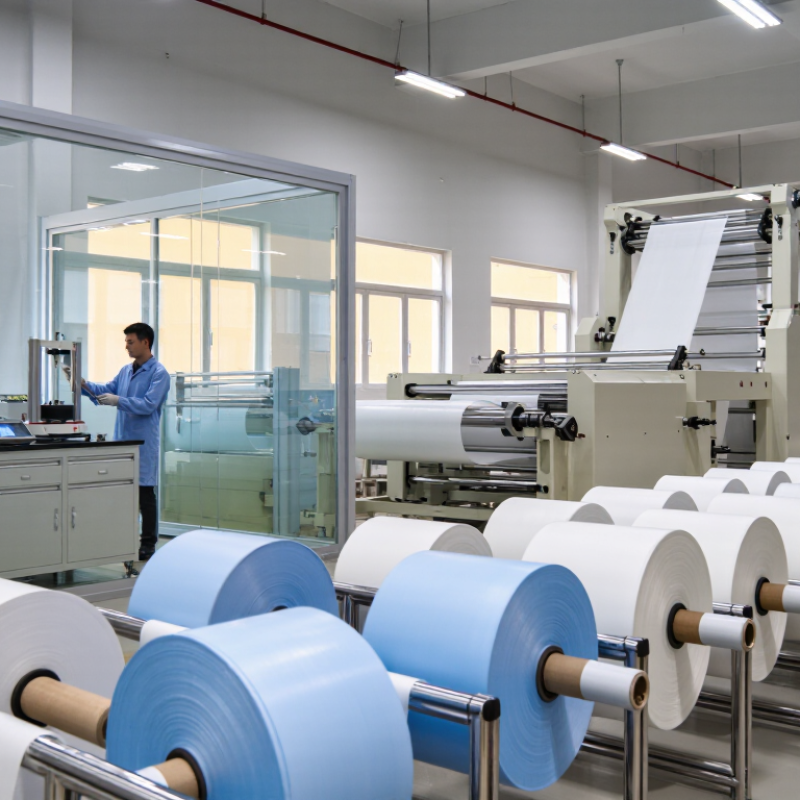
Production capability deserves equal attention. Visit the facility when possible, or request a live video inspection. Review carding, web forming, thermal bonding, spunbond, meltblown, or needle-punching equipment. Confirm the supplier can maintain stable output at your required width and monthly volume. Ask how operators control line speed, temperature, and roll tension. Inspect storage areas too. Damp warehouses can damage otherwise suitable material. Production photos alone are not enough.
Quality systems should be visible in records. Request batch traceability, inspection plans, calibration dates, and recent test reports. Independent laboratory verification adds confidence for critical applications. Discuss defect limits before placing an order, including holes, uneven edges, color variation, and roll hardness. A polished sample can mislead. One overlooked issue is packaging; crushed rolls may arrive with permanent wrinkles. Leave room for trial orders and corrective action. Supplier evaluation is never perfectly objective, and my own checklist can miss practical problems on a busy production floor. Recheck assumptions after the first shipment.
How to Choose Non Woven Fabric Suppliers in 2026?
Recommended evaluation weight for materials, production capabilities, and quality when comparing non woven fabric suppliers.
Materials and compliance receive the highest weight because fiber type, basis weight, tensile strength, filtration performance, and regulatory documentation directly affect product suitability. Production capacity and quality systems should be verified through sampling, process audits, ISO 9001 records, and relevant ISO 9073 test results. Traceability and supply continuity help reduce risk during long-term sourcing.
Verify Certifications, Sustainability Standards, and Compliance
How to Choose Non Woven Fabric Suppliers in 2026?
A reliable supplier should provide more than a polished certificate. Request the certificate number, covered facility, issue date, expiry date, and certification scope. Cross-check these details with the issuing body when a public database is available. ISO 9001 indicates quality management, while ISO 14001 covers environmental management systems. Neither certificate automatically proves that every fabric meets your requirements.
Ask for current test reports linked to the exact material and production site. The report should show lot numbers, test methods, laboratory details, and tested properties. Check tensile strength, air permeability, chemical restrictions, and colorfastness where relevant. Compliance depends on the destination market and product application. Request a written statement covering applicable chemical and labeling obligations. Ask for evidence.
Sustainability claims need equally careful examination. For recycled content, request chain-of-custody records, transaction certificates, and the percentage by weight. For biodegradable or compostable claims, verify the testing standard and required conditions. A supplier may report lower energy use, but the boundary and calculation period still matter. ISO 14001 is useful, yet it does not measure a fabric’s complete life-cycle impact. Review waste records, water data, energy sources, and independent audit findings. A sample roll can reveal uneven bonding, odor, or weak edges that paperwork misses. I would not treat one successful sample as proof of stable production; repeat testing across several lots is safer.
Select the Best Supplier Through Samples and Performance Reviews
How to Choose Non Woven Fabric Suppliers in 2026?
Select the Best Supplier Through Samples and Performance Reviews
A sample reveals more than a polished product page. Request several rolls from different production batches. Check thickness, GSM, tensile strength, tear resistance, softness, and odor. Rub the fabric against a white surface to detect loose fibers or color transfer. Test it after cutting, folding, moisture exposure, and heat if your product requires those conditions. Test more than appearance.
Ask the supplier for technical data, inspection procedures, and recent quality records. Compare the stated results with your own measurements. Small differences may signal unstable production. I have seen fabric perform well in one sample but weaken during continuous handling. That warning should not be ignored. Still, one sample cannot prove long-term reliability.
Performance reviews should include delivery accuracy, defect rates, communication, and complaint handling. Look for reviews from buyers with similar applications and order volumes. Contact two or three references directly, when possible. Ask whether the supplier corrected problems quickly and documented the cause. Online comments can be selective, so verify details instead of trusting star ratings. A supplier that shares test reports and explains limitations appears more credible. Their answers should be specific, not simply reassuring. Also review lead times during busy seasons. A low price means little if delayed fabric stops your production. Keep written records of every test, promise, and revision. That discipline makes comparison easier, although my own evaluation sheets have sometimes missed packaging damage. Inspect the cartons too. Reliability includes the shipment, not only the fabric.